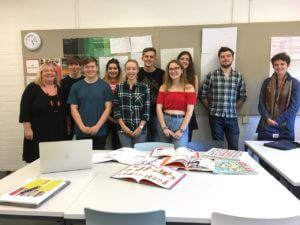
Our second Baseline Shift session was run by Camara Dick, Seniz Husseyin, Malaika Johnson and Martha Macri, members of a group of students who have been working collaboratively over the past year to promote new perspectives on diversity in creative disciplines. Former students of the Department, Ziana Azariah, Fay Biggs and Lily Brown were also part of the team. The “I am, we are” team have been helping reshape some of our teaching, including building an entirely new module for Part 3 students. They’ve also captured a snapshot of key diversity topics in creative industries through the writing, design, and publication of a zine.
The team all share different experiences and opinions of diversity within design, motivating them to come together with the hope of creating changes they can be proud of. They’re challenging the dominant western canon within our discipline, seeking to counterbalance this tradition by broadening our curriculum and introducing new perspectives. As well as opening up new career opportunities, another motivation is to evolve a stronger sense of community within the department and hopefully encourage students to both find their individual voice and move beyond our ‘cultural comfort zones.’
Building a module
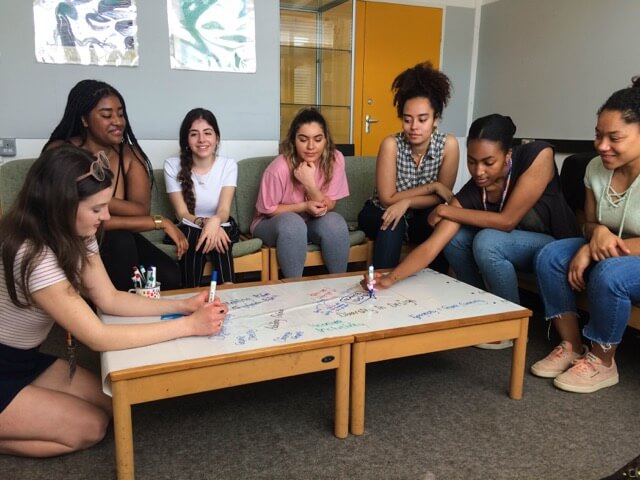
The new Part 3 module, Design for Change, was co-designed between the team and academic staff in order to promote the critical engagement of social issues and the exploration of these through a practical self-selected design brief. This module encourages students to engage with a range of current debates and perspectives on diversity, inclusion and global perspectives in design. Students studying on the module produce a practical project that aims to inspire change by engaging users in a cause.
Engaging students of the future
In order to create awareness and share ideas, the team ran an activity on undergraduate applicant days in which prospective students would share their interests within design. These were then displayed on a series of polaroid-style designs in order to show the vast range of design opinions and passions within the group of applicants. The idea was to start building a community among applicants even before they are offered a place to study here, but also to stress that we welcome people who might define ‘design’ in a range of different ways. In the future, the team plan to use this polaroid scheme with all students, in order to create a discussion about respective cultures and different inspirations.
Beyond Typography undergraduates
Whilst the team are all students within the Department of Typography and Graphic Communication, they have worked with a variety of groups and individuals in order to achieve their outcomes. They interviewed staff and students from all three departments in the School of Arts & Communication Design, as well as graduates and other professionals with links to the University. The insights gained form the basis of their ‘I am, we are …’ zine.
Future goals include:
- encouraging students across the School to embrace their diversity and explore different perspectives within their own creative practices
- diversifying the range of jobs available within the department’s real jobs scheme, with one aim being to reach out to Reading’s refugee community to provide design services with direct benefits to individuals, such as CV formatting.
The zine
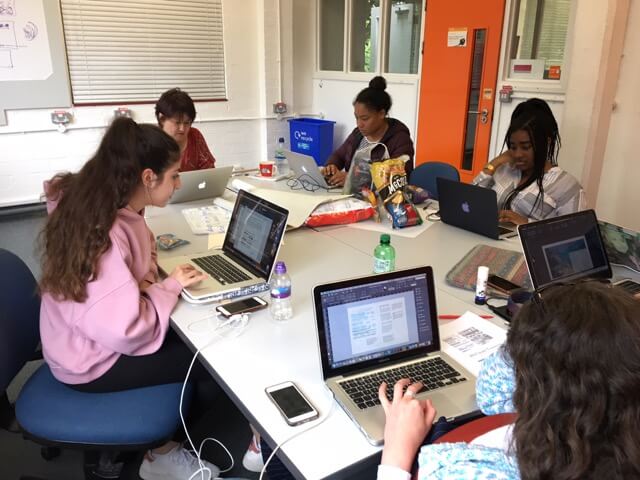
Following receiving funding from the University’s Partnerships in Learning and Teaching scheme, the team decided to publish a zine in order to spread awareness of diversity and inclusion in the creative sector. To showcase a broad range of practices, they decided to include content from members across the School as well as graduates. After interviewing students and practitioners about their work, the team began to put together and design the zine. With budget and time restrictions in mind, the team then began to make decisions including the grid system, format and paper stock. They chose an A5 format as their aim was to print a lot of copies, and this allowed that to be possible whilst sticking within their budget. As there were multiple people working on the zine, it was important to design a grid system with this in mind so that the final pages were consistent and cohesive. In terms of paper stock, they chose a matte finish as they wanted it to stand out against a ‘typical brochure.’
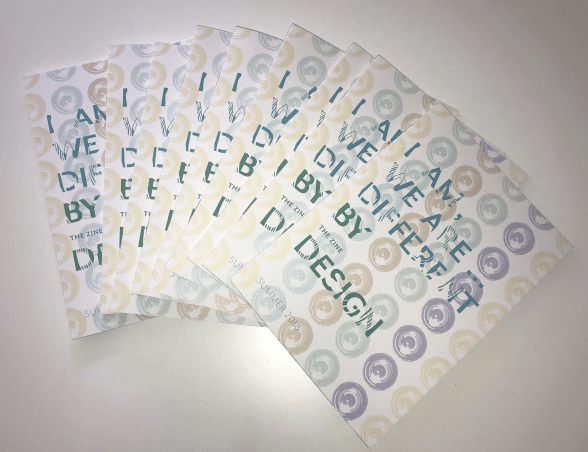
The team said they felt incredibly satisfied and proud with the final outcome, receiving lots of feedback about how inspirational they, and the zine, were. In the future, they aim to create a bigger and better zine, by including more content and space for them to be able to finesse their typography. They also hope to develop a theme for the next zine and extend its publication across print and digital channels so that they can engage a wider audience with diversity in design.
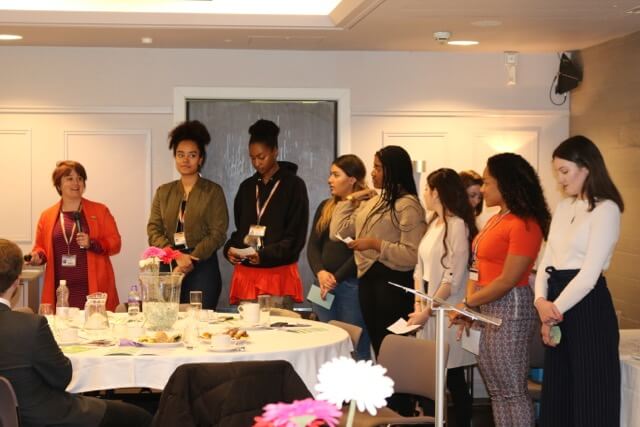
After their Baseline Shift presentation, the team gained a lot of interest from new and current students looking to get involved. Growing the team will allow for the project to continue and evolve.
Moving forward
This talk opened up the discussion of diversity within the department and allowed attendees to gain insight and become involved with how we can shape and develop this project for future students.
“As someone who never really second guessed the lack of diversity in the department teaching and the discipline of Graphic Design as a whole, the talk gave an interesting viewpoint on to this, shining light on the issue. The Zine itself was a great publication, and I hope it continues to be produced, getting better and better each year. I’d also like for the department to showcase speakers from different backgrounds to bring this idea of diversity forward into all aspects of our learning, as I think we have a lot to learn from each other!” – Laura Marshall, Part 3
As a student currently taking the new ‘Design for Change’ module I found it incredibly interesting to hear their thoughts and aims for the module, and have been really enjoying the discussion, debates and different perspectives within the seminars. After the talk, I spoke to other students who had attended and discovered they found it equally fascinating and hope to get involved in future projects.