
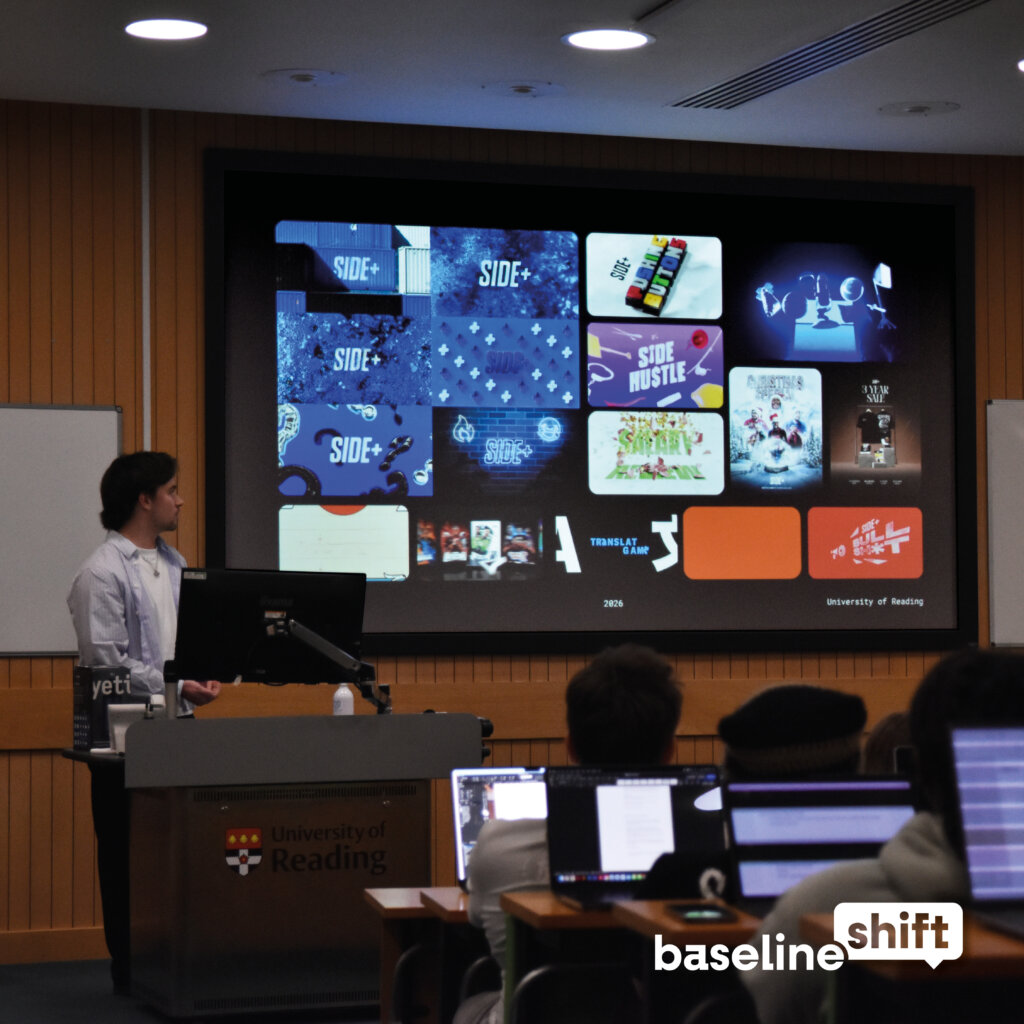
Sharing his journey this week was the incredible Sammy Rudkin, Graphic Designer for the internationally successful content creation group, Sidemen. Sammy delivered an inspiring talk on his impressive career journey so far, speaking honestly about what to expect from the industry, being transparent about income at every stage of his career, and offering valuable advice on how to stand out as a designer.
An early start
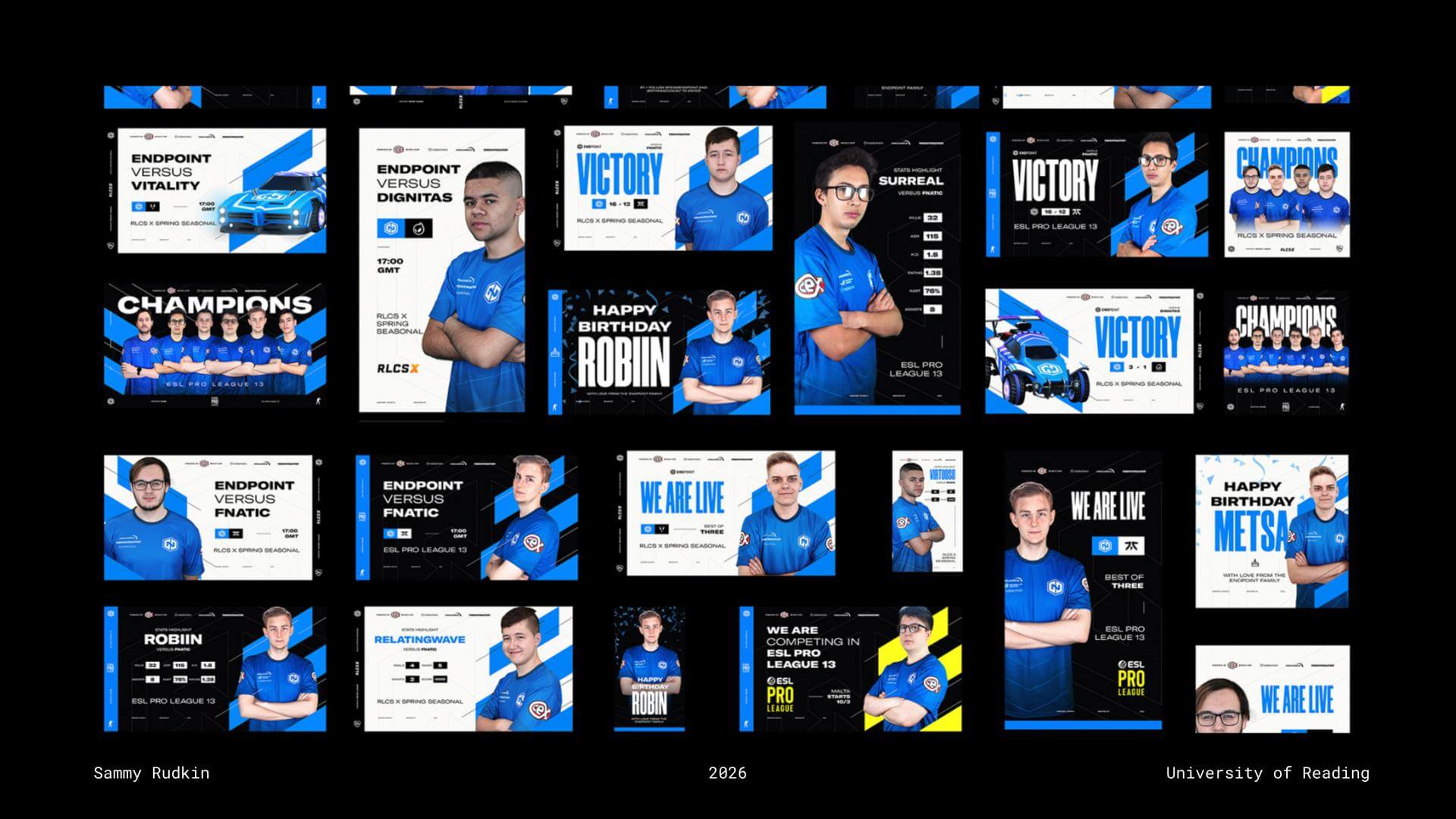
Sammy’s interest in design began at an early age. From as young as ten years old, he developed many of his practical skills through YouTube tutorials, perhaps why he now believes that “YouTube is the best website in the world.” Experimenting with small VFX and motion graphics for YouTube intros helped Sammy continually refine his software skills. At 15, he offered to create a graphic for a colleague at his part-time job in a local pub, who later went on to establish an esports team. That opportunity snowballed into Sammy becoming involved in much of the early design work for competitive esports organisation Endpoint. Sammy used this stage of his journey to remind students to “just make stuff all the time,” explaining that you never know where personal projects and experimentation may lead.
Side hustles
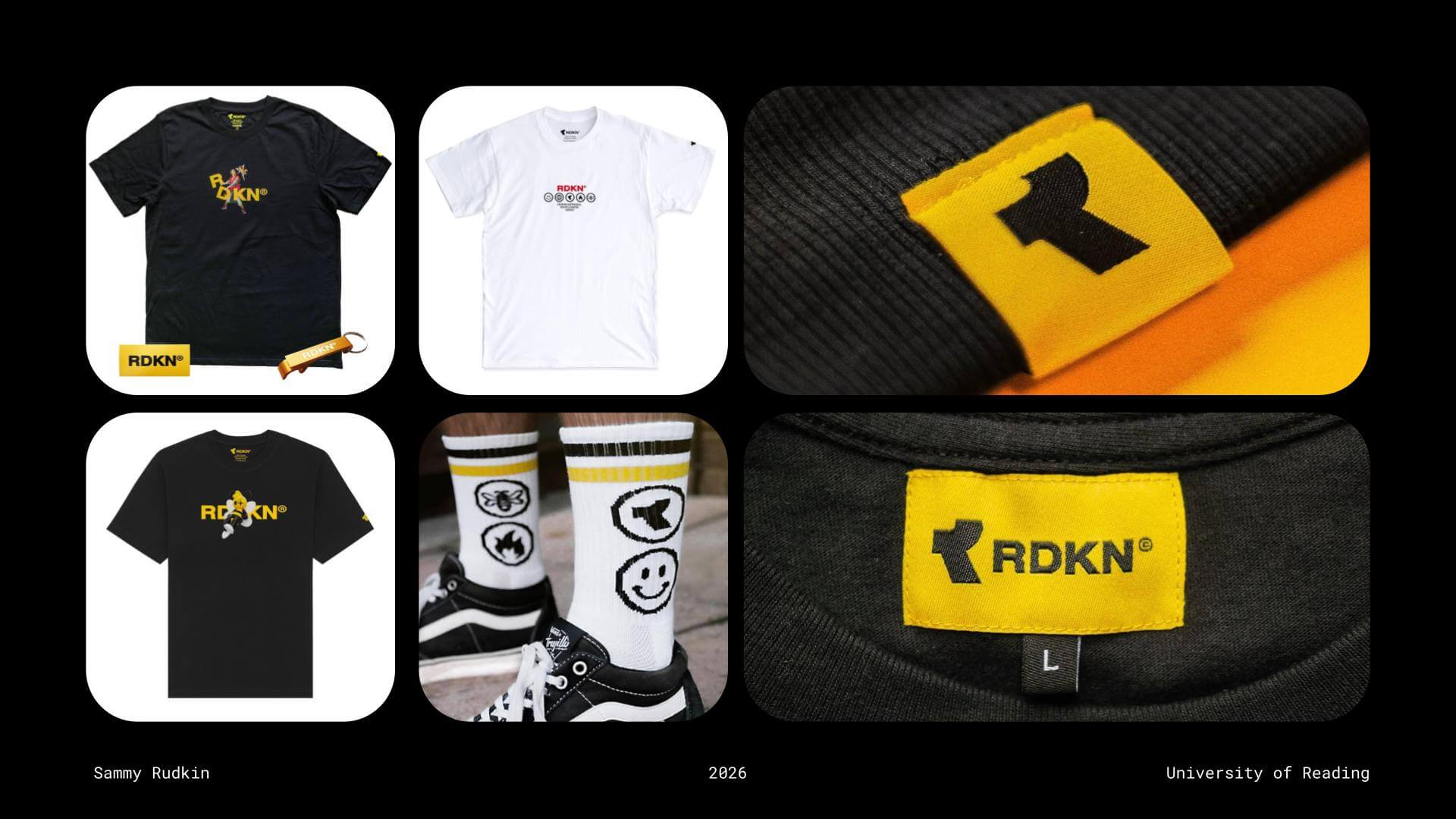
Alongside his graphic design work for Endpoint, Sammy also advocated for taking on side hustles. His side project of choice was launching his own clothing brand, which he sold within his personal circle and generated impressive revenue from at just 16 years old. A few years later, Sammy began studying Graphic Communication and Illustration at Loughborough University. When Covid forced teaching online during the first two years of his degree, Sammy found himself completing coursework ahead of deadlines, leaving him with valuable free time to further develop his software skills. During this period, his focus shifted towards 3D software, beginning with Cinema 4D. Reflecting on this time, Sammy reminded students that “Uni is the only time where you’ll have three years to just learn stuff, so make the most of that time.”
Having something to show
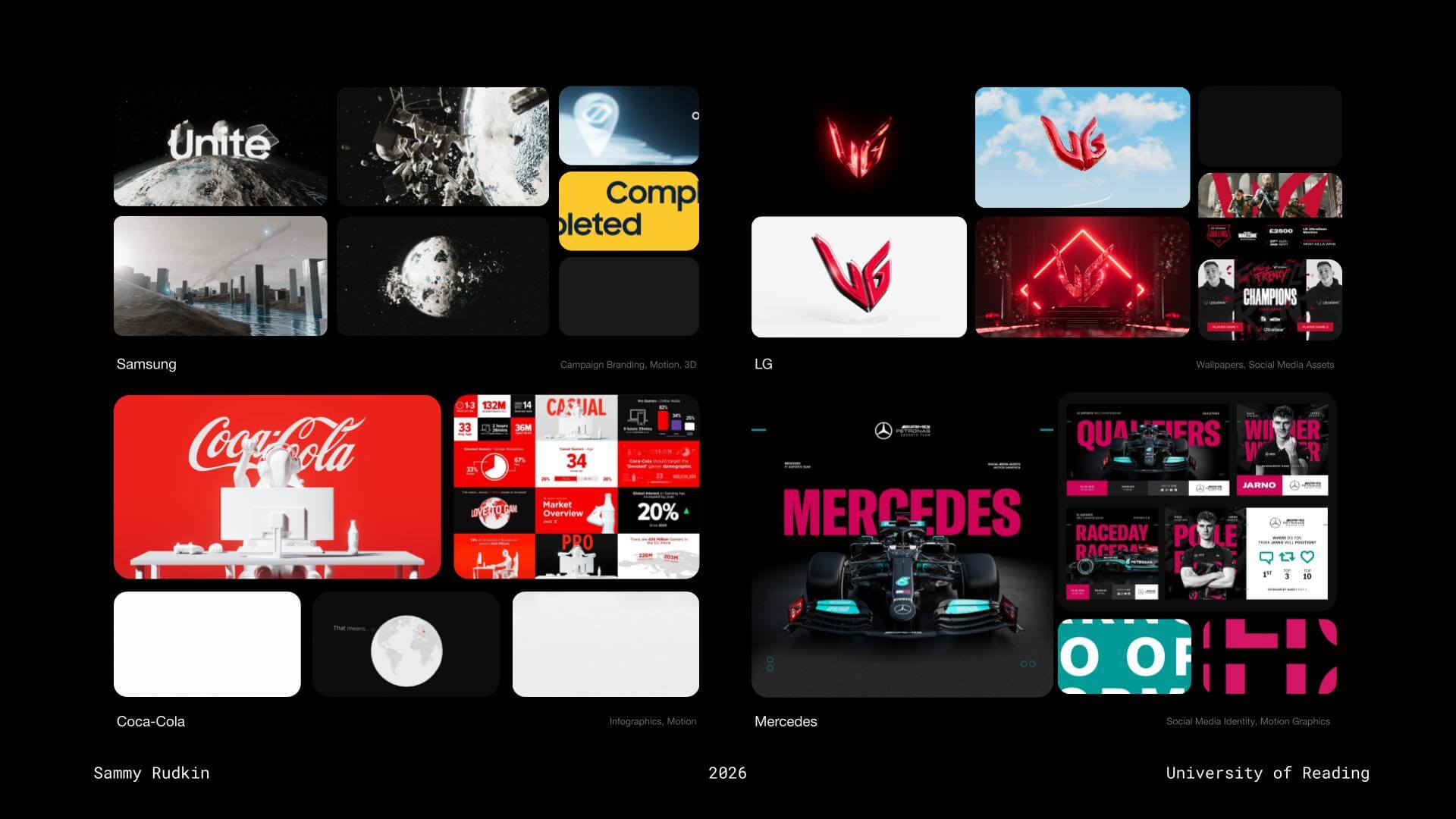
By building an Adobe Portfolio featuring work created during his time at Loughborough alongside projects completed for Endpoint, Sammy was able to begin applying for placement opportunities. After sending more than 50 emails, he secured a placement year position at gaming-focused marketing agency Kairos Group (now NewGen). During his time there, Sammy worked with several globally recognised brands, significantly strengthening both his CV and portfolio. Projects included designing wallpapers for Coca-Cola and creating social media templates for Mercedes. Looking back, Sammy reflected on how the esports experience that began from creating a small motion graphic “for fun” ultimately helped him secure his placement year, and later kickstart his design career.
Make your work work for you
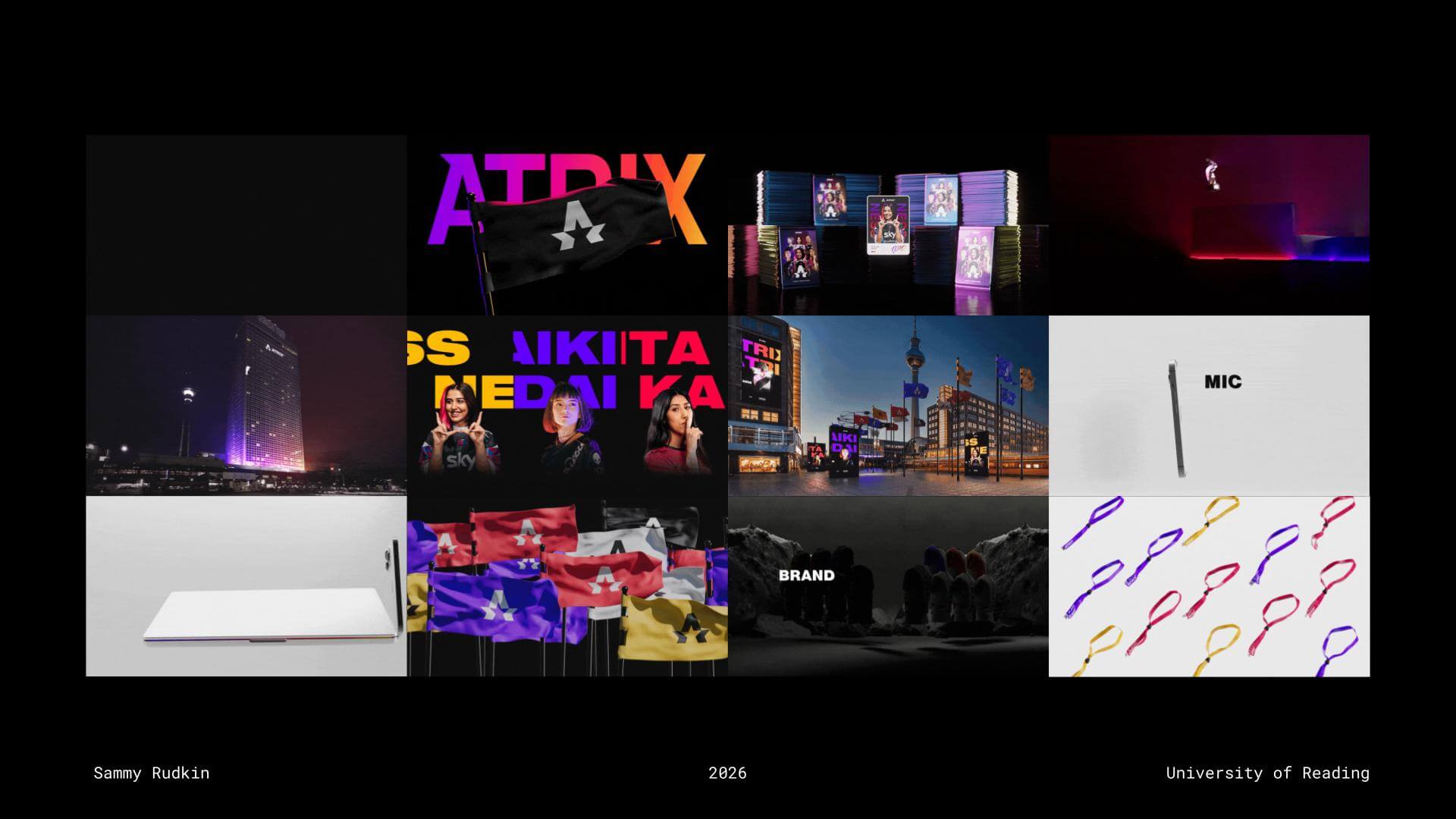
Sammy encouraged students to make the most of final-year coursework by creating projects that would strengthen their portfolios and push them creatively, rather than simply designing for grades. He followed this philosophy himself, producing visually striking final-year projects with a strong emphasis on motion design, helping his portfolio stand out amongst the competition. Alongside university work, Sammy also entered competitions such as D&AD, where he won a Yellow Pencil for his motion work on the IMAX brief. He later submitted his final-year branding project, Atrix, to the Adobe Digital Edge Awards, winning a cash prize for the project’s impressive visuals. These achievements eventually led to him being invited to speak at Adobe MAX while still studying at university, an incredible feat.
Sidemen
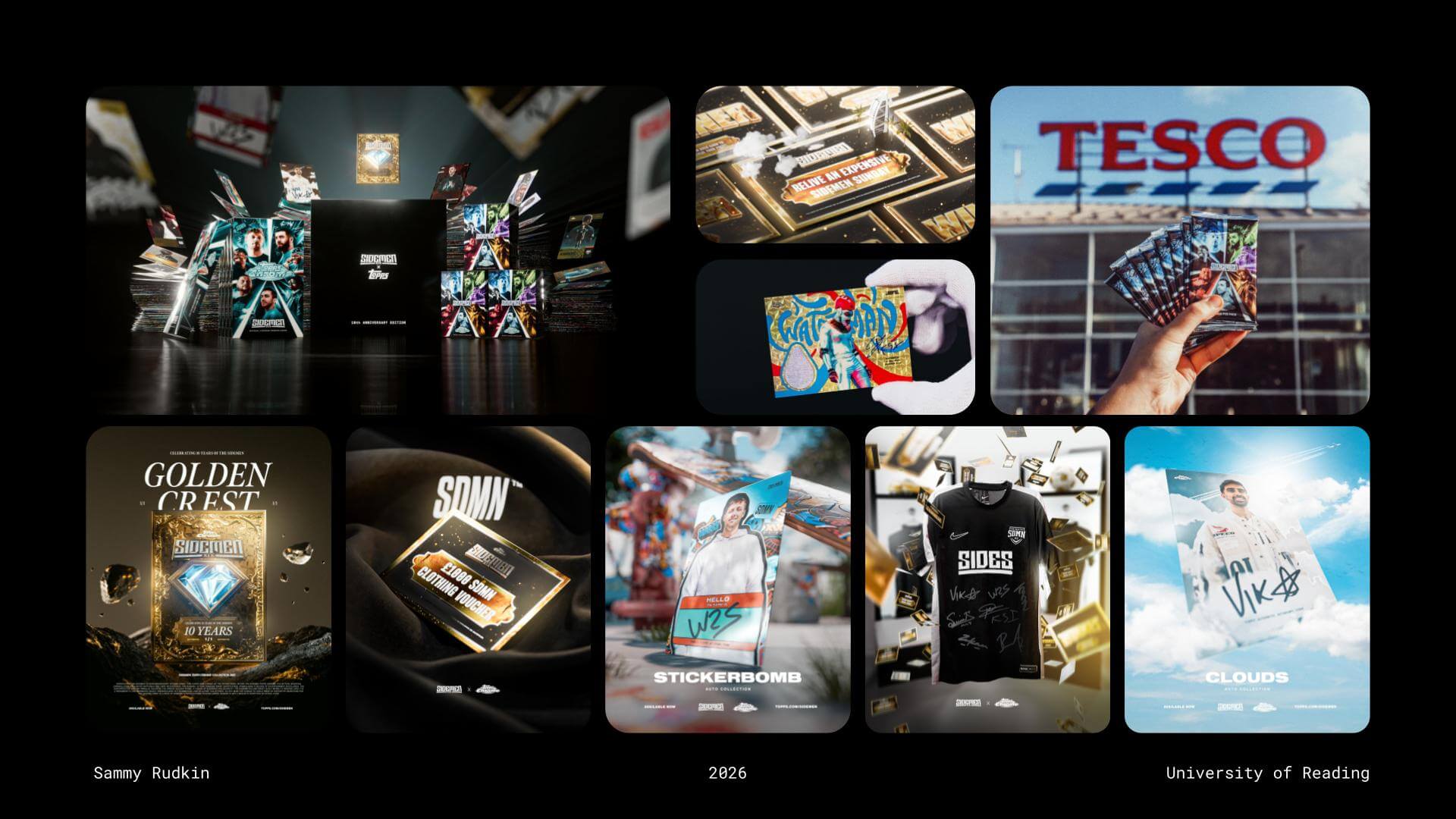
Following graduation, Sammy began searching for career opportunities. Inspired by the journey of a Loughborough alumnus, he reached out to ask about his career path and whether any opportunities might be available. Although no immediate role emerged, the connection remembered Sammy’s work and later contacted him to join the Sidemen project. Sammy emphasised that the best way to build opportunities is to “make yourself known to people.” His early work with Sidemen involved creating social assets and card designs for collaborations such as Sidemen x Topps, alongside graphics for podcast intros and transitions.
Owning projects
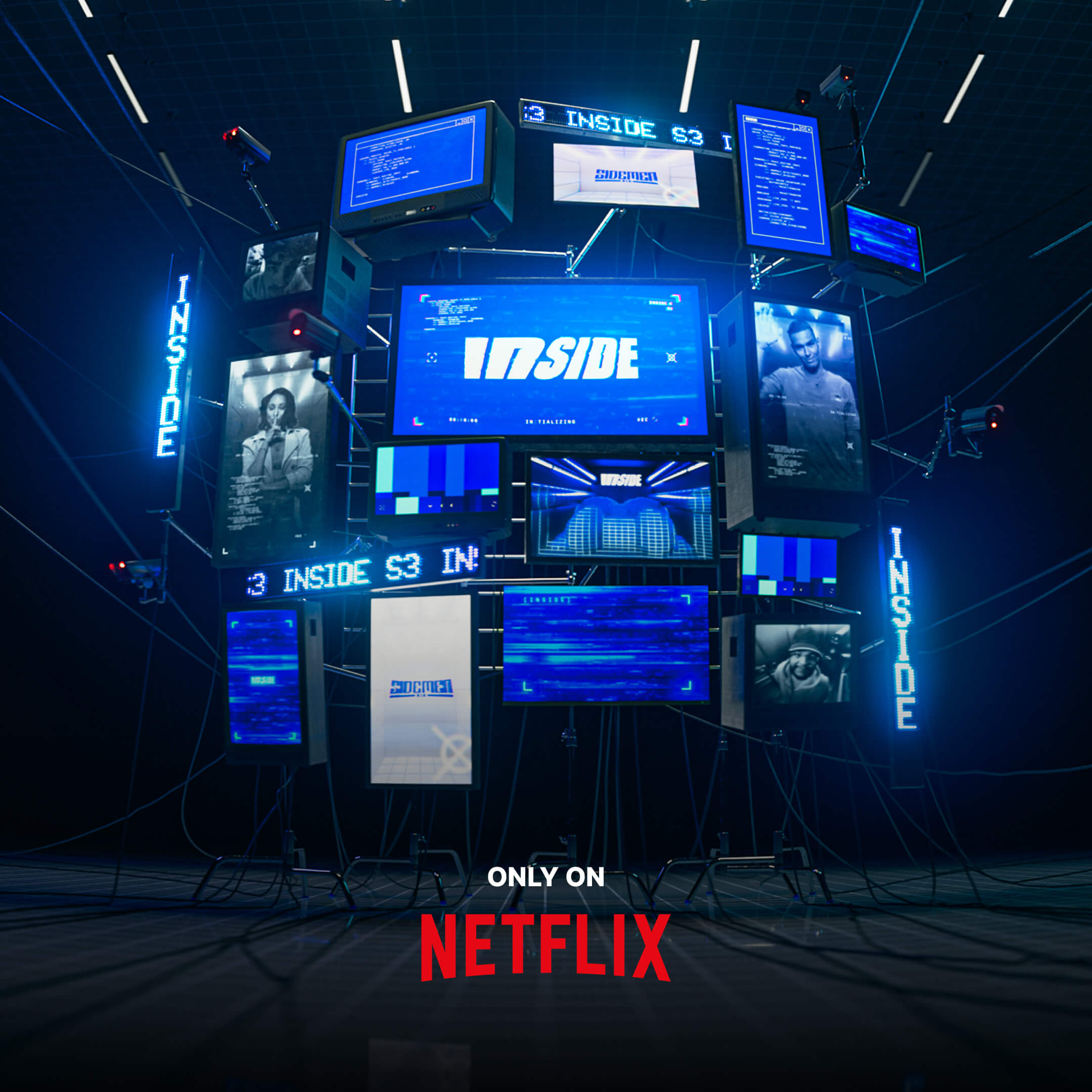
Despite only graduating a few years prior, Sammy has progressed at incredible pace, taking on more responsibility within his role. He gained full ownership of the 2025 Charity football match for Sidemen, which is something that he feels only comes with working inhouse, suggesting that a designer is unlikely to gain full ownership within an agency (and to keep this in mind when looking at what career path you want to pursue). For this project, Sammy designed with fan engagement in mind as the Charity match’s aim was to push social media reach as much as possible across several platforms. He more recently had the opportunity to take similar authority over Netflix’s hugely successful Sidemen series, ‘Inside’. Sammy elevated the visuals in this project to another level, proving that continuously honing your craft, saying yes to opportunities, and getting involved in ambitious projects will always be reflected in the quality of your work.
AI’s role in design
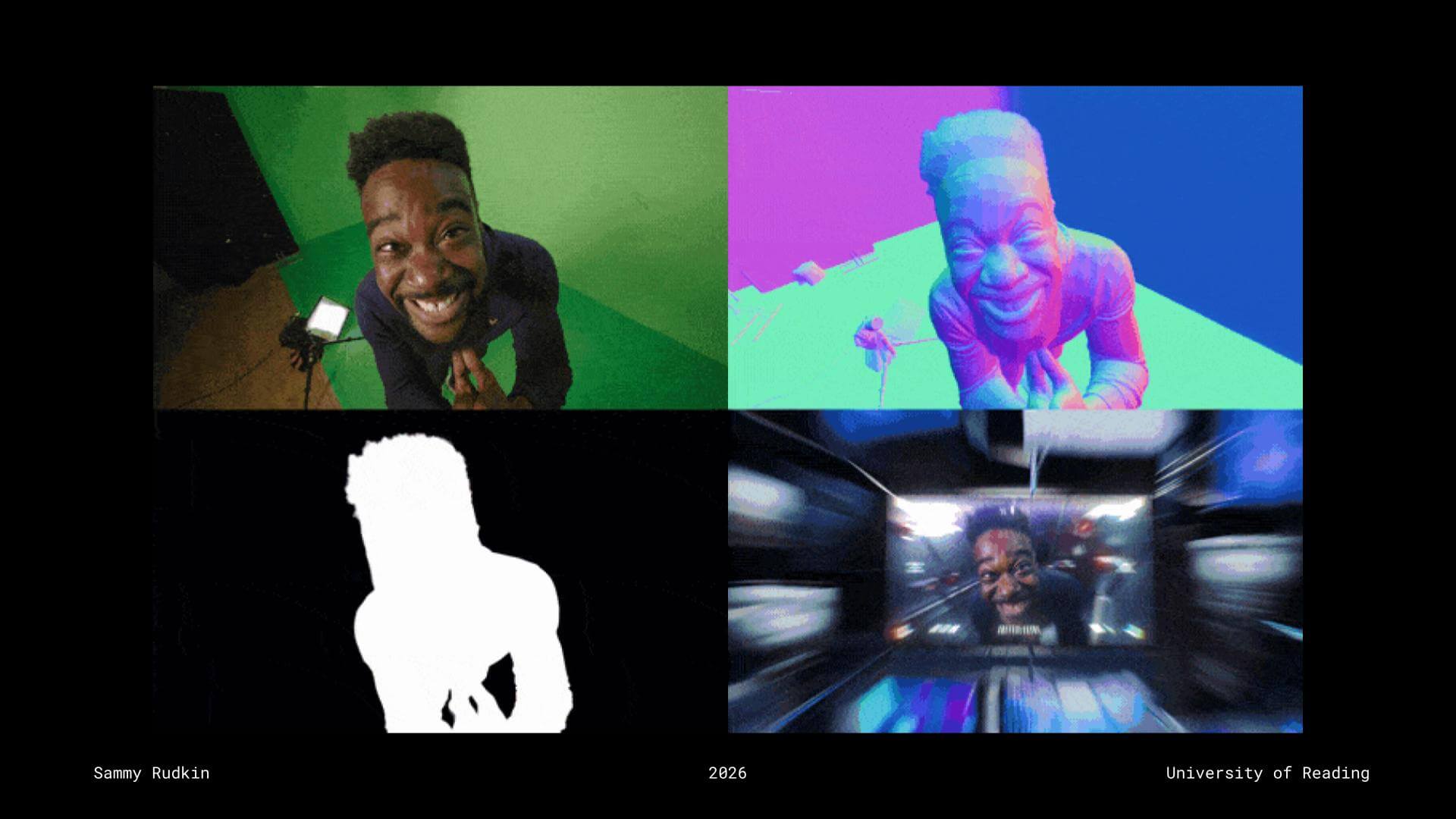
Sammy spoke openly about AI’s place within the creative industry, encouraging students to view AI as a tool rather than a replacement for designers. Using examples from his recent work on Inside, he demonstrated how AI-integrated software such as Beeble could assist his workflow by analysing green screen footage and estimating object contours and camera proximity through bump and depth maps. Rather than feeling threatened by AI, Sammy encouraged students to stay informed about emerging technologies and learn how to integrate them into their workflows. While AI can support efficiency, the industry still values human creativity, originality, and practical design skills.
Advice for young designers
- Constantly create, starting with personal projects because your portfolio is crucial
- Uni is the last time you have this much spare time so use it to learn as many disciplines and pieces of software as possible
- Be sure to prioritise a work life balance
- Make yourself valuable by finding out what skills the industry is asking for in your field – gain those skills
- Don’t work for free… unless:
- It’s a personal project
- For a friend/in exchange for something
- It’s short and too good to turn down
– Written and edited by Tommy Molnar