
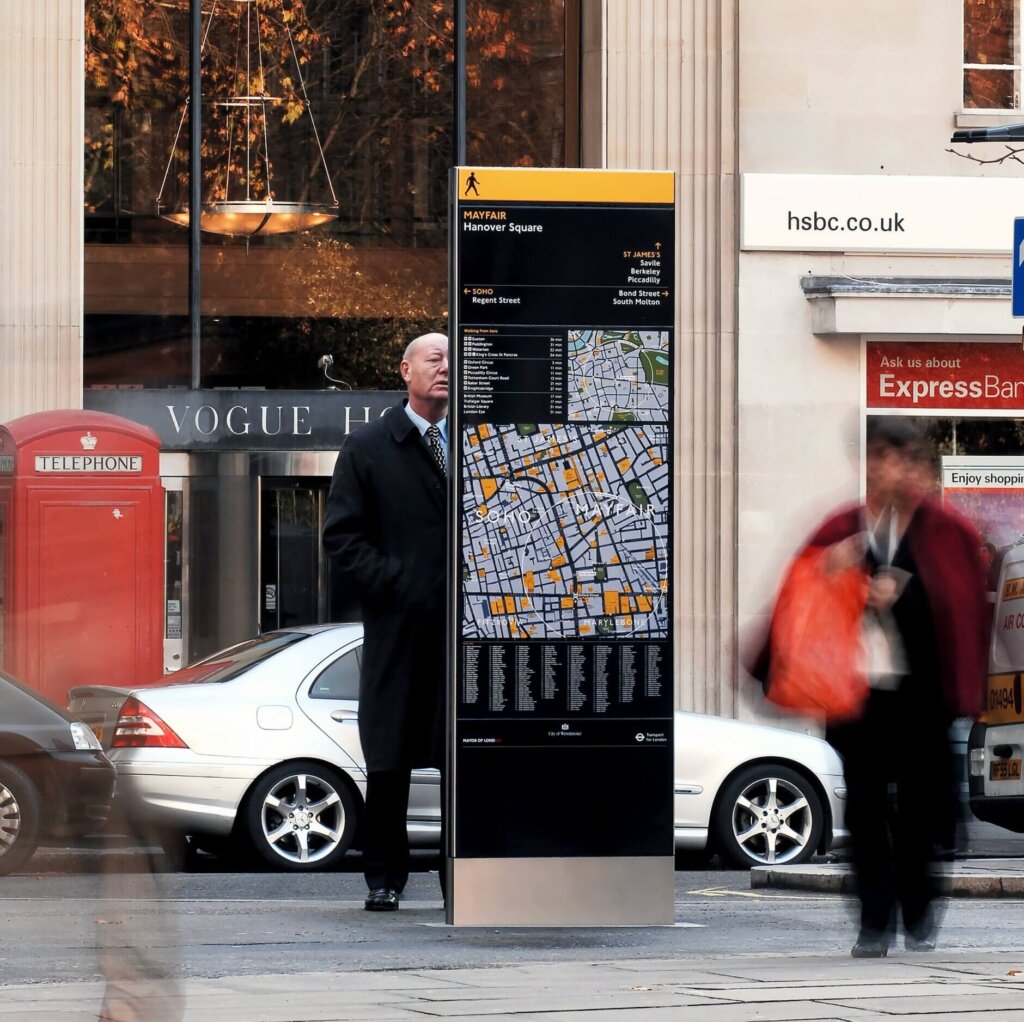
Baseline Shift welcomed James Dunford from Applied Information Group, a studio specialising in wayfinding and information design. James is a graduate from the University of Reading (both and UG and PG level) and has been at Applied for over 16 years. In his talk, he took us through his journey since being a graduate, the projects that have shaped his career as well as the realities in a wayfinding job.
What is wayfinding?
James began the talk by explaining that way finding is much more more than designing signs. Wayfinding is described as considering how people read, understand and navigate a space, using strong sensory and visual cues to make the user’s journey as clear as possible. For the audience, he broke this idea down into three crucial questions: Where am I? Where do I need to go? What happens next? The aim for a successful way finding system is for these questions to be answered without excessive thought from the user, making the most complex spaces easier to navigate.
Designing wayfinding systems?
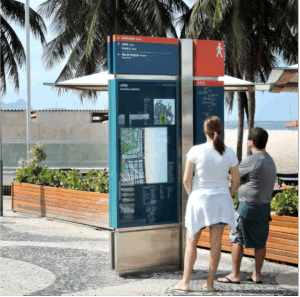

At Applied Information Group, they engage in a wide range of projects spanning museums, airports, parks, universities and public spaces internationally. Their work travels far beyond singular signs and maps – they prioritise how one information system includes many different elements working together. All of these projects James and his team have created have succeeded from understanding how people use and move through different spaces.
One of the most interesting parts of James’ work is the scale and time it can take to complete these projects, with many projects often taking years. This being the case, all design work needs to be accessible beyond all current trends and remain clear and understandable over time. At the centre of James’s work lie many problems needing to be solved, revolving around key questions like: “where is the initial struggle in an environment?” and “how can we find the clearest way to guide people through it?”.
Understanding human behaviour
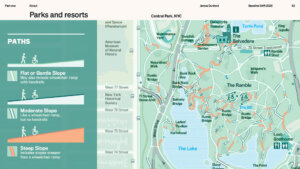
James explained that before designing anything, the studio considers how people move through environments and where confusion occurs. The team have to consider where these points occur and recur, as well as factors such as language, accessibility mobility and even how someone feels within this situation. Gathering this key information starts from observing how people naturally move through a space and where hesitation is present.
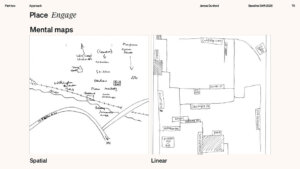
One method that was mentioned by James was mental mapping. This is technique that gets people to physically draw an environment from memory so it can raise any specific landmarks that are naturally prominent in peoples mind but also, this can showcase any areas that are harder to remember. This initial research stage its crucial to directly informing the design decisions that follow.
Designing for accessibility and clarity
Within wayfinding systems, accessibility and inclusivity one of the two most important factors. How efficiently people can understand information stems from colour, contrast, hierarchy and placement. A clear example James gave was ‘why are tigers orange?’. He explained that although the colour orange is bright to humans, it is not as visible to tigers’ prey, therefore in the tigers can take advantage of their adversaries’ accessibility issues . James’s message related to colour perception and how it can vary with different users, reinforcing the importance of testing the designs for different accessibility factors such as colour blindness or visibility.
Museum of Fine Arts, Houston
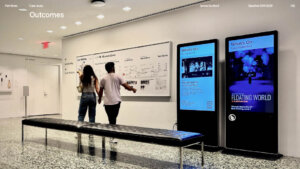
One of the main case studies James shared was the Museum of Fine Arts in Houston. Overtime the museum had expanded for new buildings, extensions and entrances making the environment very difficult to navigate. Applied Information Group were asked to rethink how visitors moved through both interior and exterior spaces, taking into consideration arrival points, floor maps and exterior signage.
A key part of this design process was the amount of testing that occurred with having the designs perform in the actual environment. The aim was to see what feedback visitors and staff were willing to give on the in person designs and what still needed improving. Interestingly, this led visitors to discover areas of the museum they hadn’t previously known existed.
Reflections and advice
Evolving technology is known to scare upcoming young designers, so James wanted to reflect on changes within the industry and the importance of maintaining strong core design skills. ‘A good idea with a bad explanation can still fail’ is a message James wanted students to grasp when we come to presentations and communicating our design choices.
James’s talk showed that thoughtful design can improve everyday experiences in both subtle and significant ways. From museums to hospitals, wayfinding design can enhance the way people to interact with the world around them, without even realising it.
Advice for young designers
- Stay curious and keep learning.
- Focus on solving the problem.
- Be open to feedback.
- Design with accessibility in mind.
- Be patient with the process.
– Written by Matthew Banks
– Edited by Sam Buxton