Context
Behind the degree is a programme set up by the University of Reading designed to focus on the experience of graduates who have left university. It also focuses on providing examples from real-life experience and promote the support available to students. Our client aims to launch this initiative within the Department of Typography and Graphic Communication, with the potential to expand to the School of Arts and Communication Design, and the university.
Restated brief
To create a student-oriented brand with a unique illustrative style that can be used across a variety of courses, whilst also reflecting the University of Reading and promoting the reasons why prospective students should study at the University of Reading. It should also reflect current design trends whilst also being timeless and not being biased to one subject area or school.
Deliverables
- Logo
- Social media template
- Visual identity guidelines
User needs
The new branding should appear friendly, approachable, and professional to the user. The client’s stakeholders are current and potential new students with the potential to go university-wide in the future.
Notes from initial client meeting
- We don’t have to follow the university brand guidelines now, be creative.
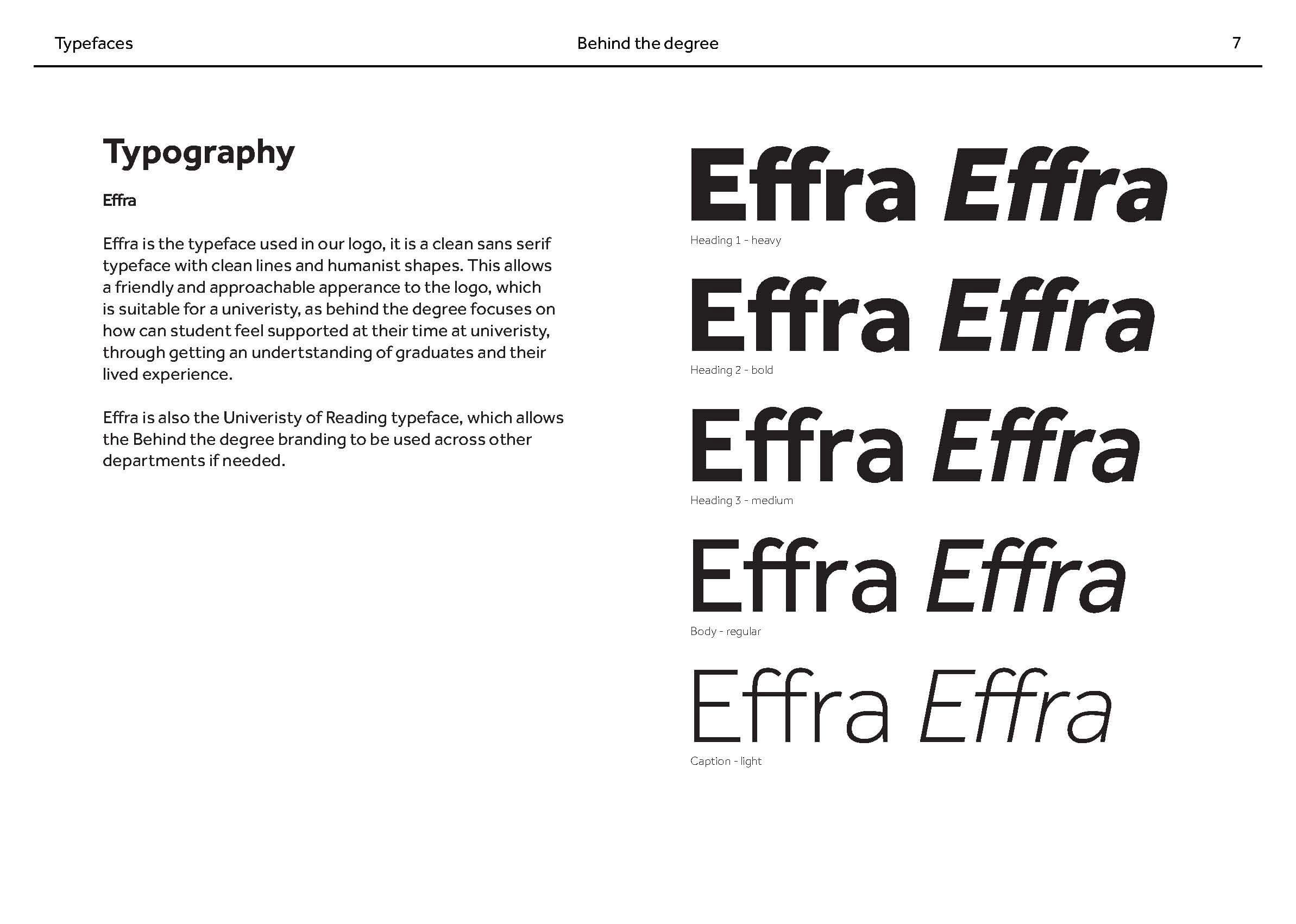
- The university uses the typeface Effra, so it can be considered in our brand guidelines.
- Mock-ups are needed to show our design.
- Brand guidelines must be clear as it will be used by other students.
- Feedback is needed, mostly by our peers.
Research
One of the main challenges we faced in this project was trying to find competitors, as this is not something other universities have done before. Because of this, we looked for visual inspiration of corporate branding that could be adapted for educational settings. This involved looking at different typefaces, use of shape, colour and imagery. The process initially started off as individual work, which was then discussed together as a group before proposing our concepts to the client. We were also given the university brand guidelines by our client, which helped us later in the development process.
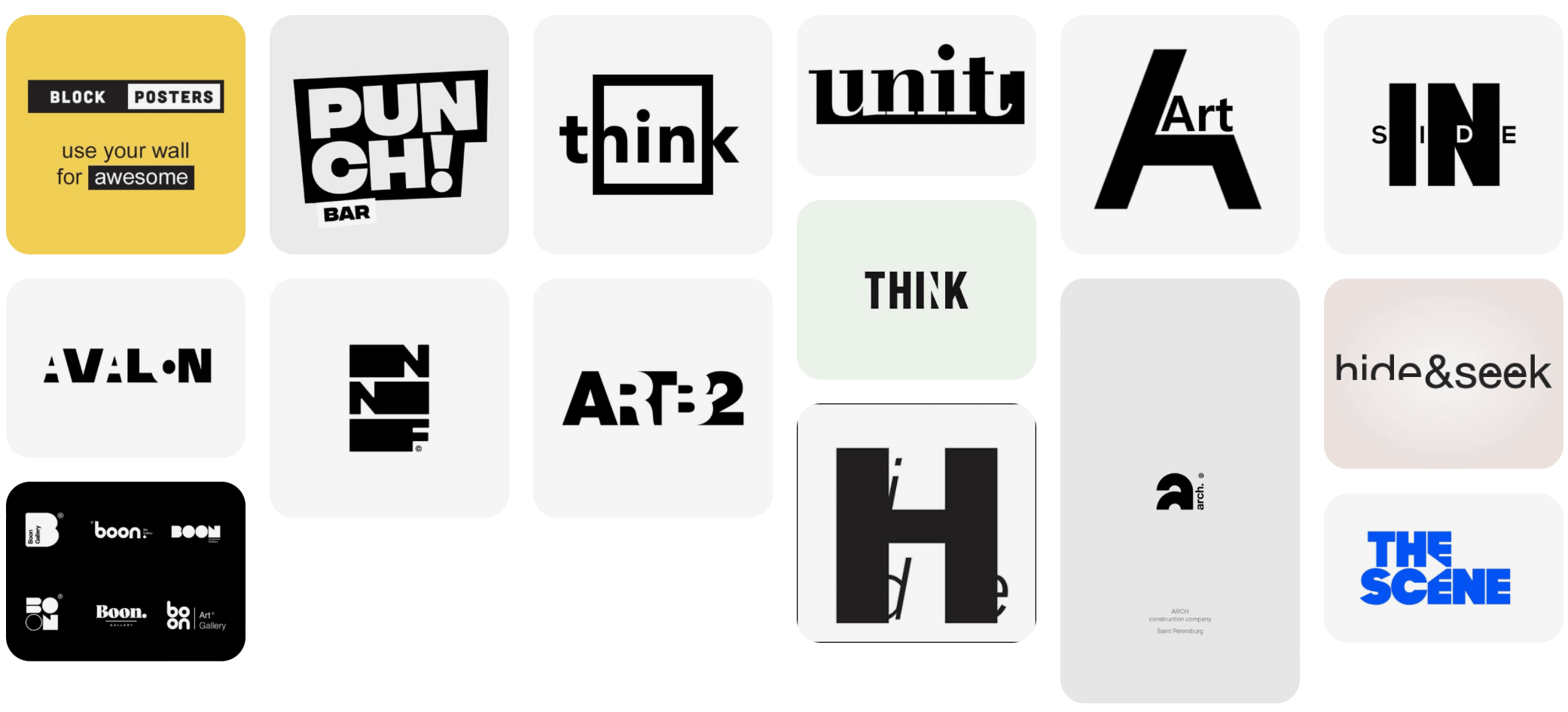
After culminating our collective research, we had a meeting with our client to show where our vision was going. The feedback was positive, and the early design stage was able to begin.
Logo sketches
Initial sketches
We created our own individual concepts for the logo design because we wanted to start with the logo design, as this would then help us to create a brand identity. We had quite a broad range to choose from. We showed them to our client, who gave us feedback and expressed their preferred logo concepts to take forward.
Book
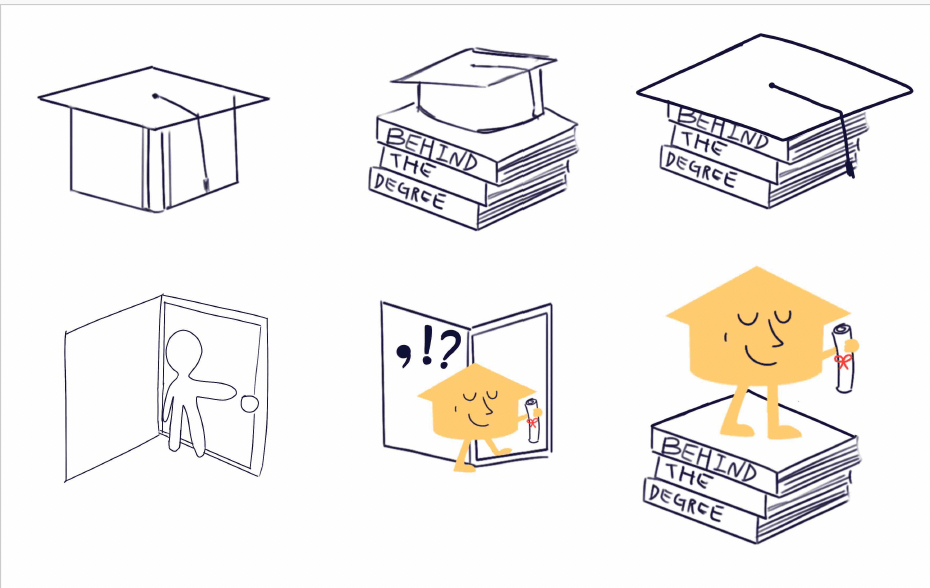
One of our first approaches looked at the use of books. We associated books with studying and felt that this would link well to the concept of university life. It was also a lot more flexible and adaptable in terms of shapes. Further on in the design process, we were able to incorporate this concept into the finalised logo.
Mortar board
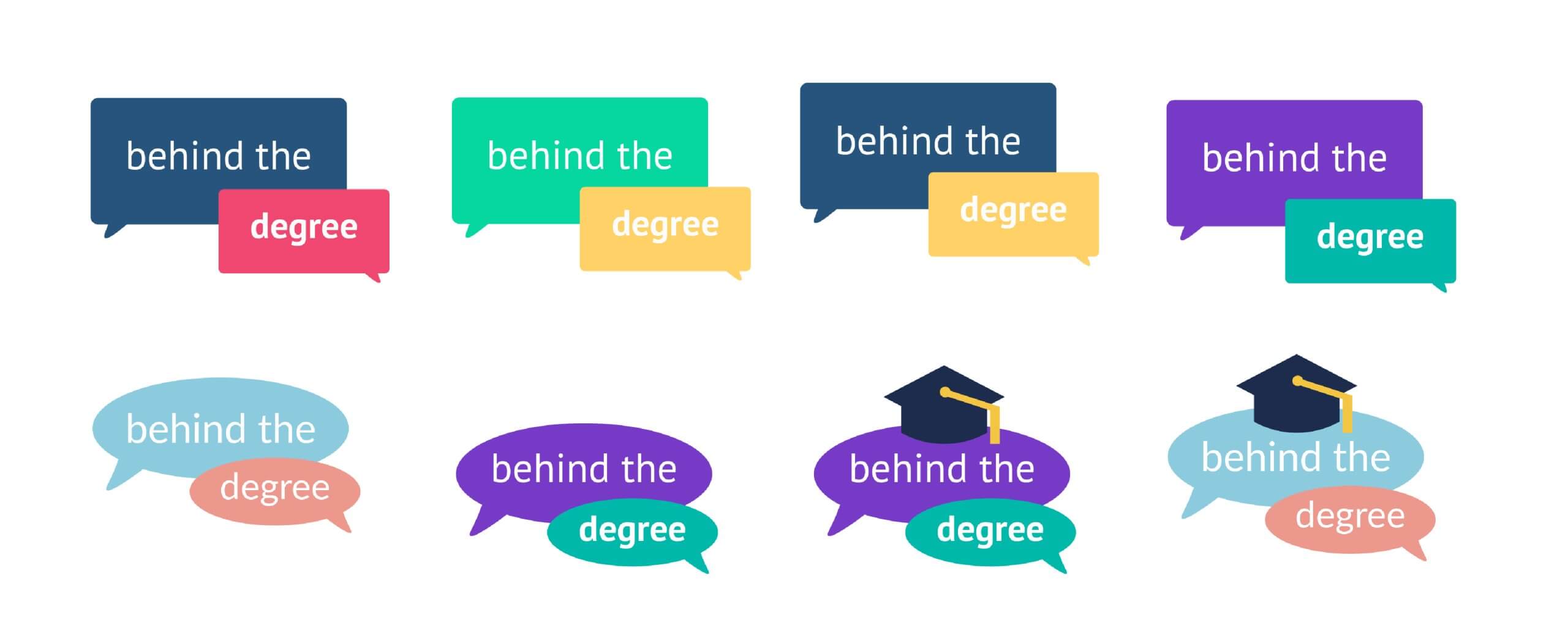
A second concept focused on the use of a mortar board. One set of experiments created the mortar board into a character, and was sometimes combined with the book concept, whereas some sketches used a hand-drawn design to create a friendly, personal feel to the logo.
Certificate
The certificate idea wasn’t one of our strongest ideas, as we found it wasn’t as versatile when it came to adapting it to different scales, so this was discarded early on.
Speech bubbles
Another concept explored the use of a speech bubble. One set of experiments used different colours and shapes, sometimes combining them with the mortarboard concept to reinforce the idea of communication and learning.
Typography
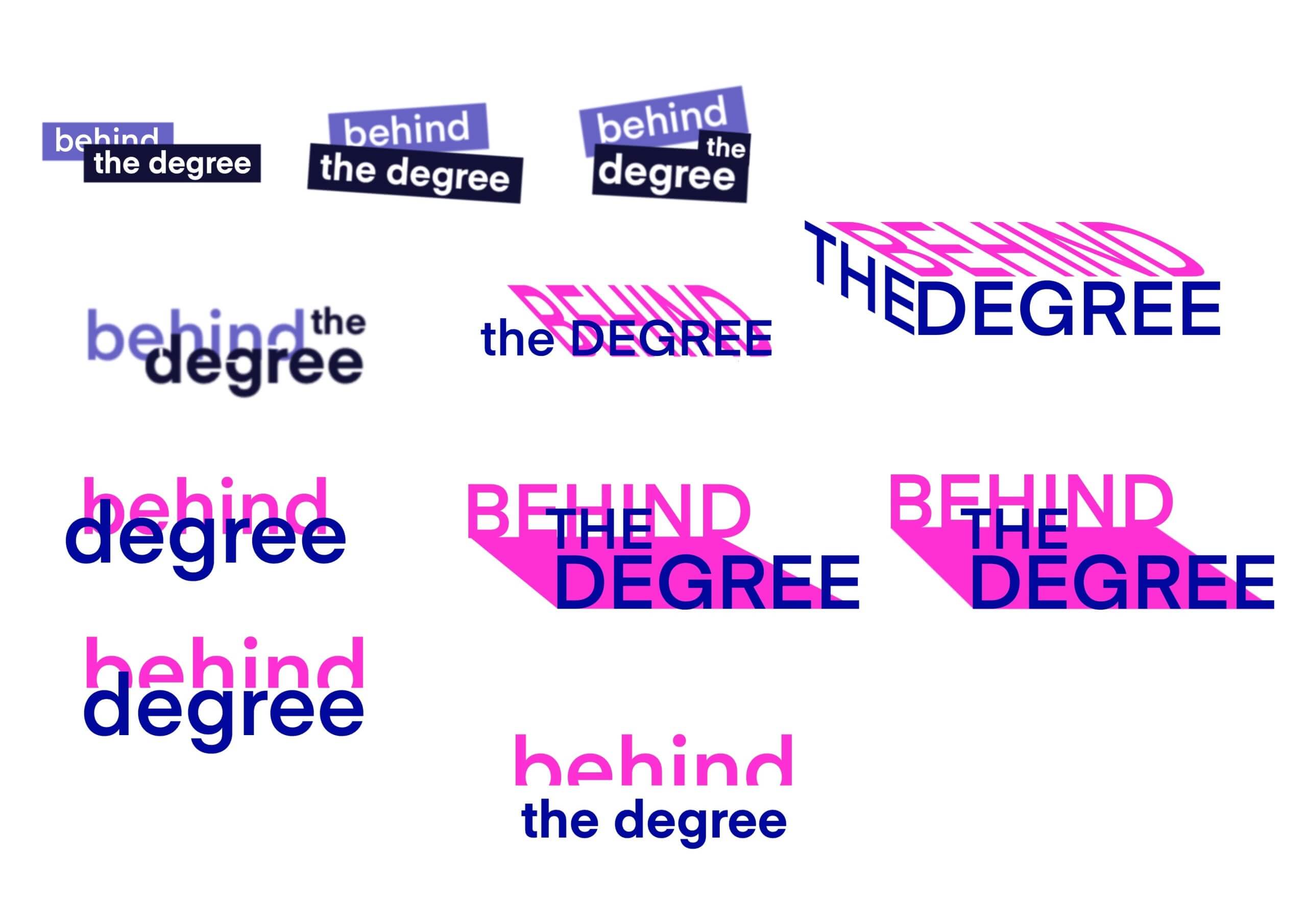
Following one of our meetings with our client, it was suggested that we experiment with a typographic logo. In the early design stages, we tried a handwritten approach but realised this wouldn’t be adaptable and viable across the set of elements. We tried finding typefaces that would replicate this, such as the Adobe typeface Brush Up. After trying to combine this with our previous ideas, we felt the only typographic approach we could try was to use the university typeface, Effra. This led to some successful early iterations, which we took to our next client meeting.
Logo development
To help us go forward with the most suitable logo design, we carried out a survey to gauge how much current students knew about the support available to them at university. A digital form was sent out to the School of Art and Communication Design and the Department of Film, Theatre and Television. We received feedback from across both departments, with 56% of respondents saying that they knew what support was available, with the remaining 44% saying they knew a little. We also asked respondents to tell us which media formats they would interact with more. 35% of the results were made up by social media, closely followed by videos.
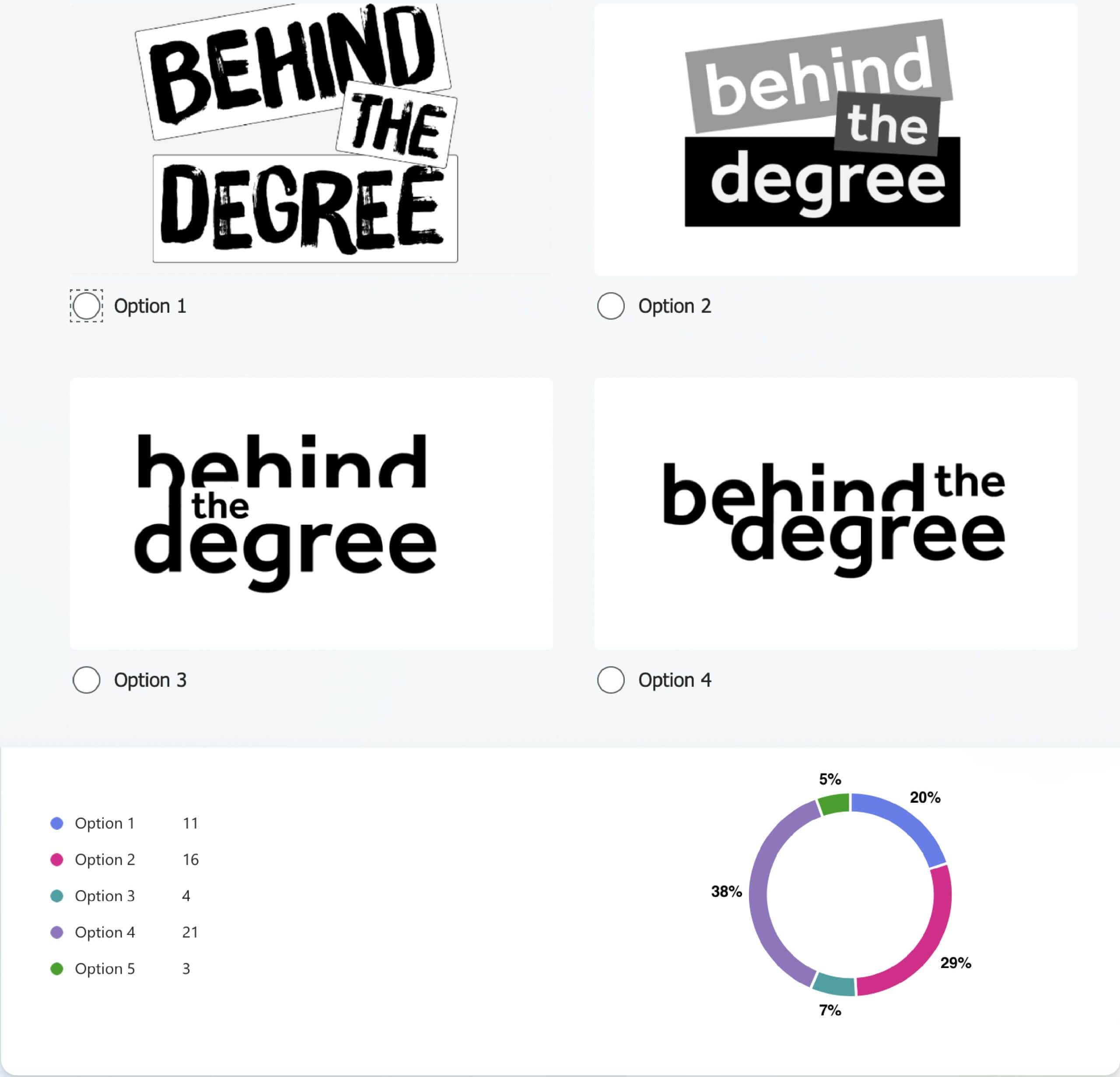
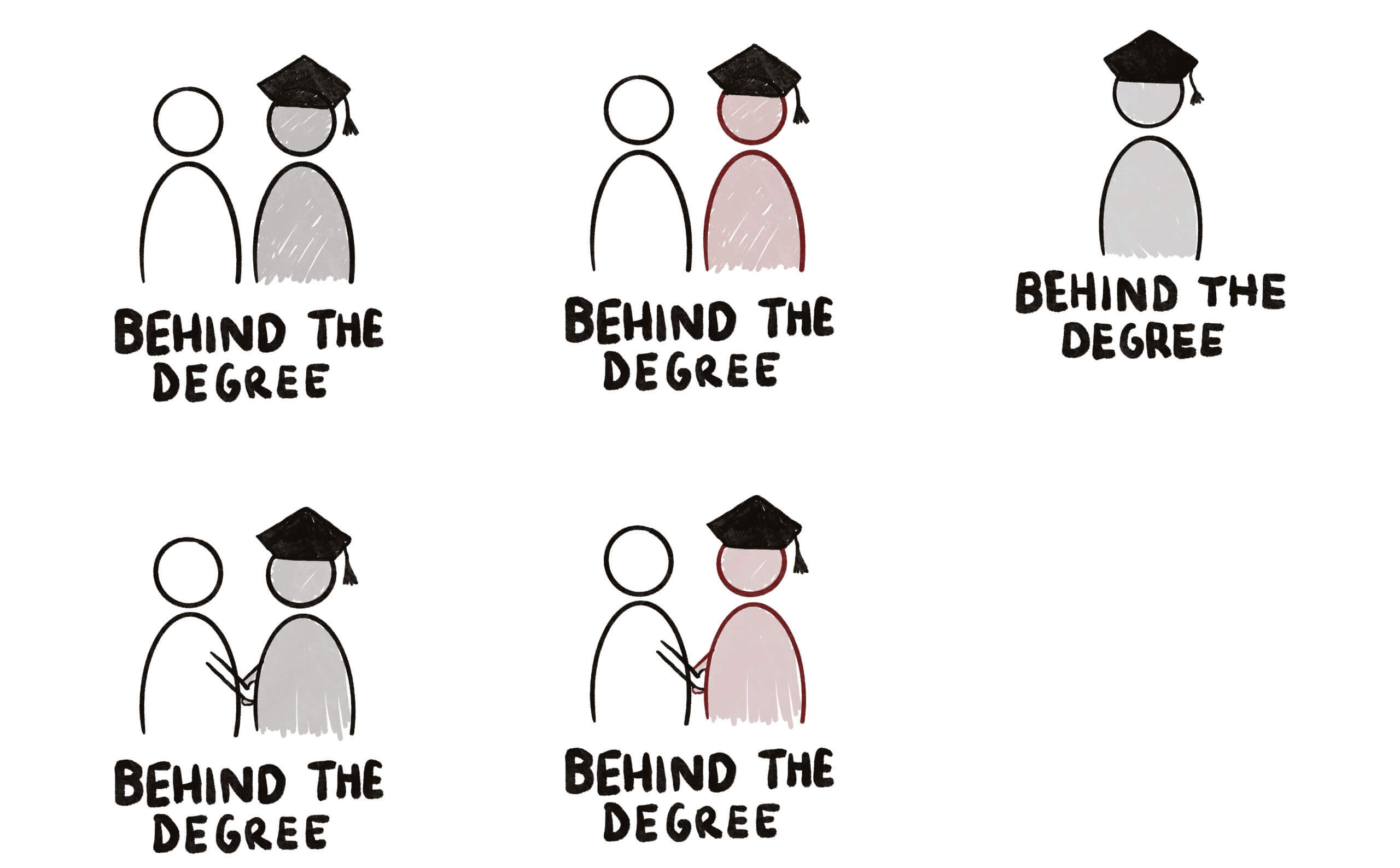
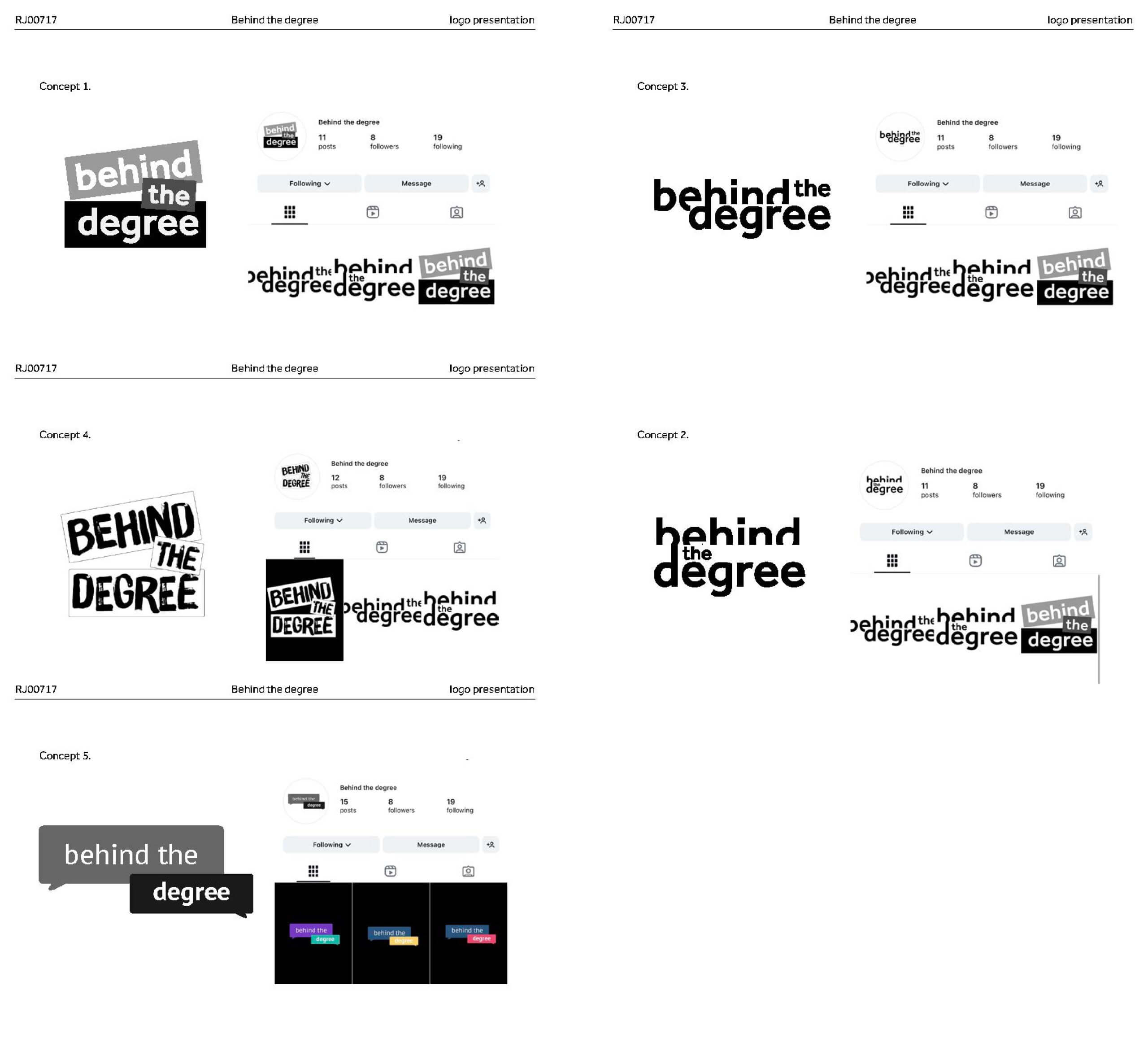
Based on this survey, we were able to reconsider and reshape our logo concepts to be used primarily on digital platforms, with the potential to also be applied to physical products and documents. Our focus changed, meaning we were now focusing on a simple yet professional response for our design. Using our initial sketches, we created rough black-and-white digital developments, which were then sent out to the same departments for feedback.
Because we had so many different concepts, we kept the survey simple, which allowed us to narrow down our concepts to two final favourites. After taking the results to our client meeting, we looked at the pros and cons of each design. As a group, we felt that the block logo worked better on different scales and was more adaptable than our typographic approach. Our client also agreed with this, and we were able to move forward into the branding stage of the project.
Colour variations
As a team, we explored a variety of colour palettes to apply to our logo. Our main priority was accessibility and legibility. We tried using a pink, yellow and green colour scheme, as these colours contrasted well and fitted our checks for accessibility in a UX colour checking website. After receiving staff and peer feedback, it was decided that we should experiment with more colour combinations. We worked with a range of fluorescent and pastel colours in RGB and received further feedback.
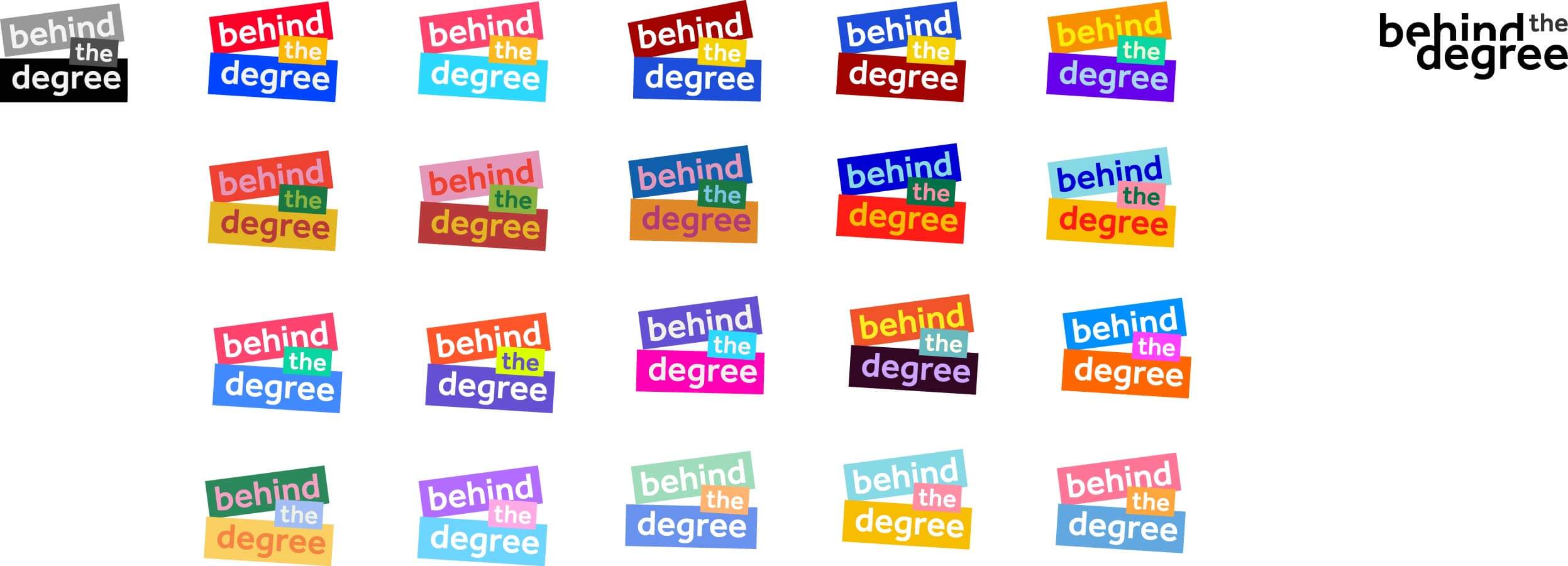
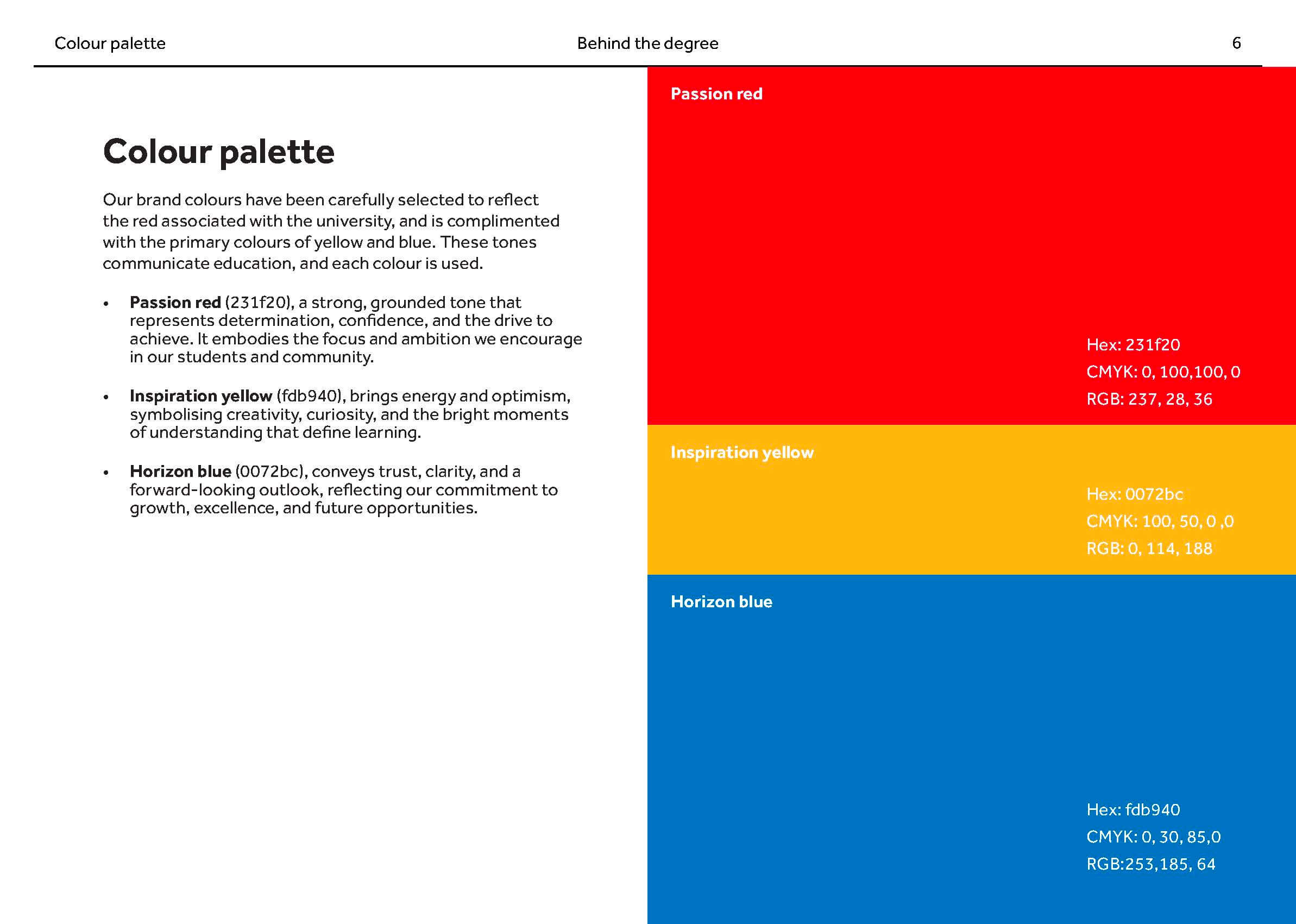
Having received our feedback, it was decided that our colours should have a meaning. Because the client wanted the branding to focus on academic support, we gathered information from the university brand guidelines and chose to use the three primary colours.
Brand guidelines
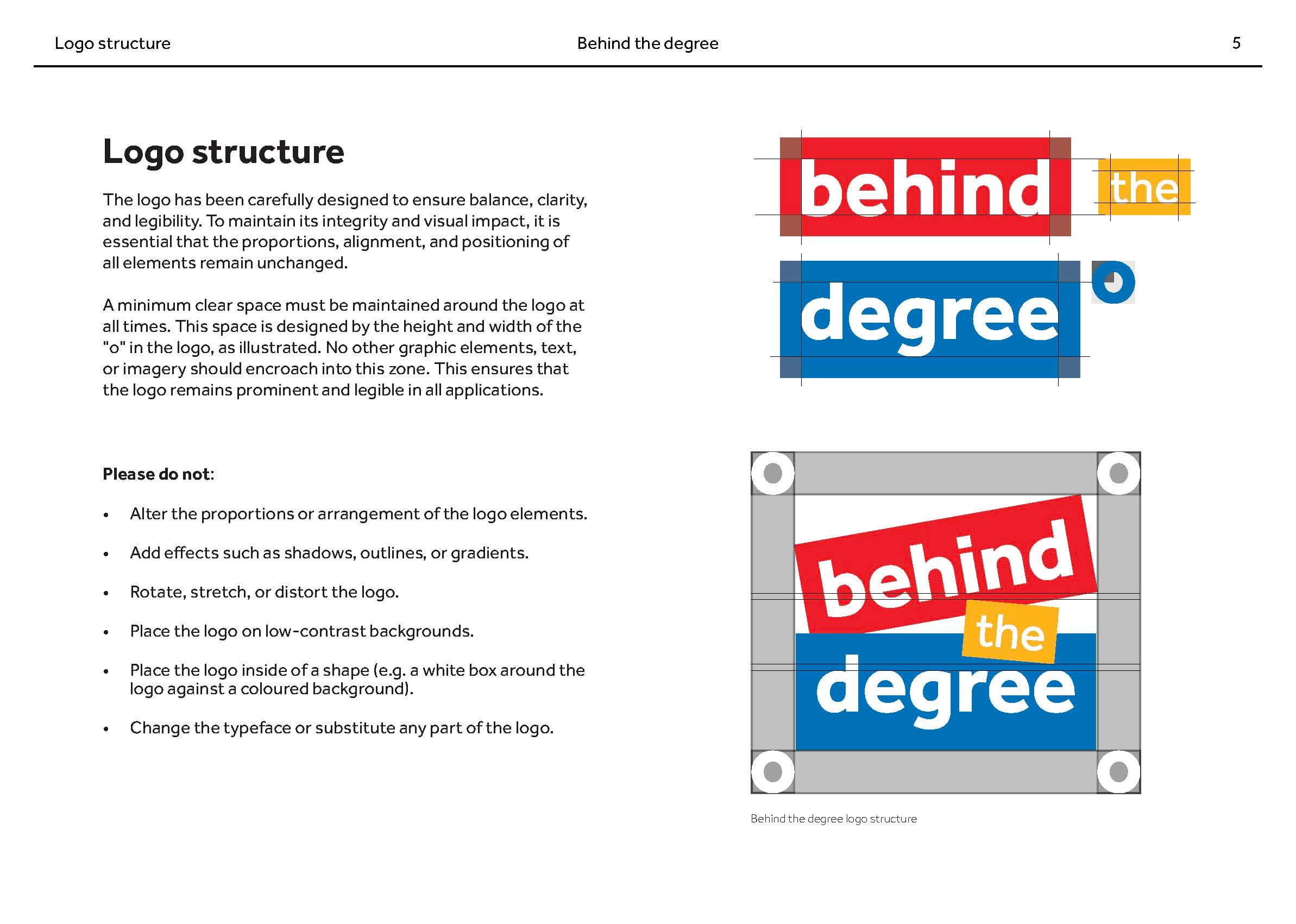
Once we had finalised the logo, we produced a document that could be used by the client in future projects, which contains the appropriate typography, colours and content layout for social media posts.
Social media
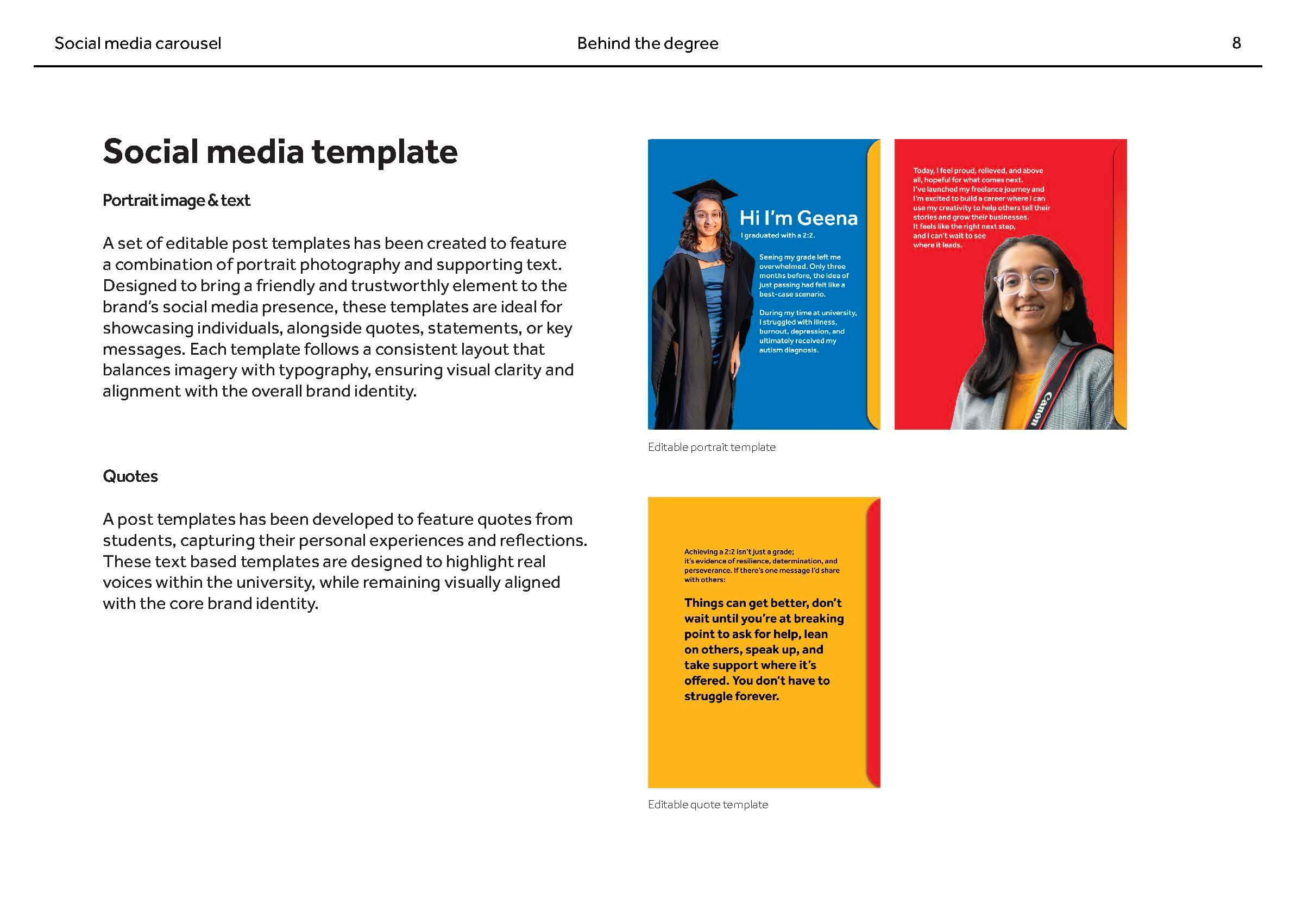
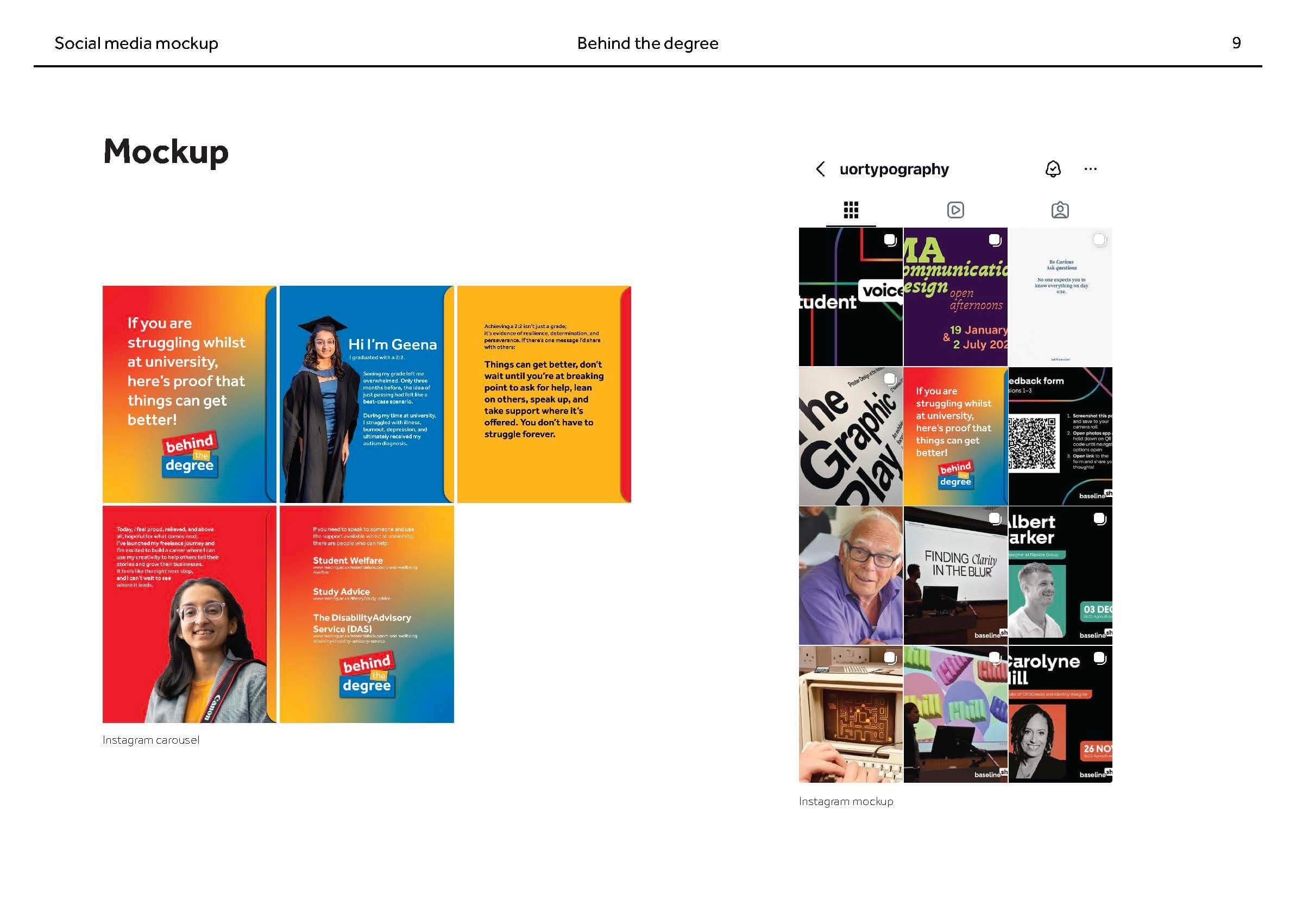
Because our client’s content will mainly be produced for digital formatting, we proposed and created a series of Instagram templates that the client could use for individual and carousel posts. We tried a variety of layouts and formats that also included using imagery to create the final series.
Outcome and reflection
Client feedback
“Thank you all for your efforts on this project, you have realised an idea that was just that at the beginning of last year – an idea to highlight student experiences whilst at university – and now you have brought it to life!”
– Rachel Warner
We are extremely satisfied with the outcomes of this project and believe that our designs respond strongly to the client’s intentions. By going through this project in separate stages, it made it much easier to create a cohesive, professional set of brand guidelines and social media templates that can be used across a wide platform. We also feel that we have met the client’s intentions of potentially expanding ‘Behind the degree’ from beyond the Department of Typography & Graphic Communication to use across the wider university community.
Creamy Li, Cristina Pons and Nicole Azanova Isherwood